Most coffees in the market go through the commercial distribution chain, where many intermediaries manipulate the green beans, having them stored for a long period of time until it they reach the final roaster. Many of these coffees get aged and stale, and most of the time; you don’t realize how old is your fresh roasted coffee.
Our coffee goes from the farmer to us and then to you.
Not just fresh Roasted but also Freshly harvested.
- We roast every batch with extreme care to acquire a full development of each coffee’s individual characteristics.
- Our blends will satisfy the most demanding consumers.
- Single-origin coffee from Colombian regions.
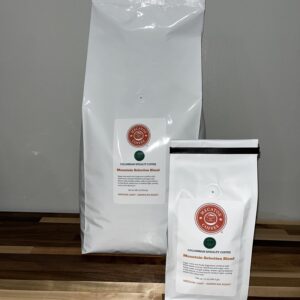
Mountain Selection Blend (American Roast)
Colombia + Ethiopia Blend
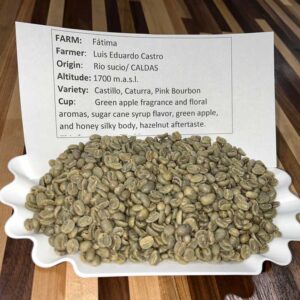
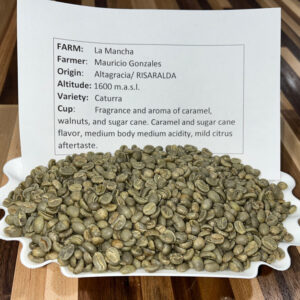
How Roasted Coffee Is Made
Roasting is a crucial step in the coffee-making process, transforming the physical and chemical properties of green coffee beans into roasted coffee products. Here’s a simplified step-by-step guide:
- Selection of Beans: The first step in the process is selecting the right green coffee beans. There are numerous varieties of coffee beans available, each with unique characteristics related to the species of coffee plant, the region in which they are grown, and the specific cultivation and harvesting methods used.
- Preparation: Green coffee beans are thoroughly cleaned to remove any debris or stones that may have been mixed in during the harvesting process. The beans are then sorted, often by hand, to remove any that are visibly damaged or of inferior quality.
- Roasting: Once the beans are prepared, they are ready to be roasted. The green beans are loaded into a roasting machine where they are heated at high temperatures. Roasters can range from small, stove-top models to large industrial machines. The temperatures can vary but are typically between 370°F (188°C) and 540°F (282°C). As the beans are heated, they begin to turn a yellow color and then progress to a light “cinnamon” brown. They will gradually expand in size and change in color to a dark brown.
- Cooling: Once the desired roast level is achieved, the beans are quickly cooled to stop the roasting process. This can be done with air cooling (where cool air is blown over the beans) or water quenching (where a small amount of water is sprayed onto the beans).
- Degassing: After roasting, coffee beans need to degas for a period of time to release carbon dioxide that builds up during the roasting process. This can take up to two days depending on the type of bean and degree of roast.
- Packaging: Once the coffee has had a chance to degas, it is ready to be packaged. Packaging often involves vacuum sealing or packaging with a one-way valve to allow gas to escape while preventing air from entering. This keeps the coffee fresh for as long as possible.
The roasting process is both an art and a science, requiring an understanding of how variations in heat and duration of roasting can bring out the unique flavors and aromas of each type of bean. Different roasting degrees result in different coffee profiles – light, medium, medium-dark, and dark roasts. Each roast level brings out distinct characteristics of the bean, altering acidity, aroma, and flavor profile.